Danish football doesn’t shout for attention—it earns it through quiet consistency. Look at FC Midtjylland’s data-driven scouting or the Danish national team’s run to the Euro 2020 semi-finals. That’s not luck;it’s a system built on small-country pragmatism and a stubborn belief in development over quick fixes. The domestic league, the Superliga。
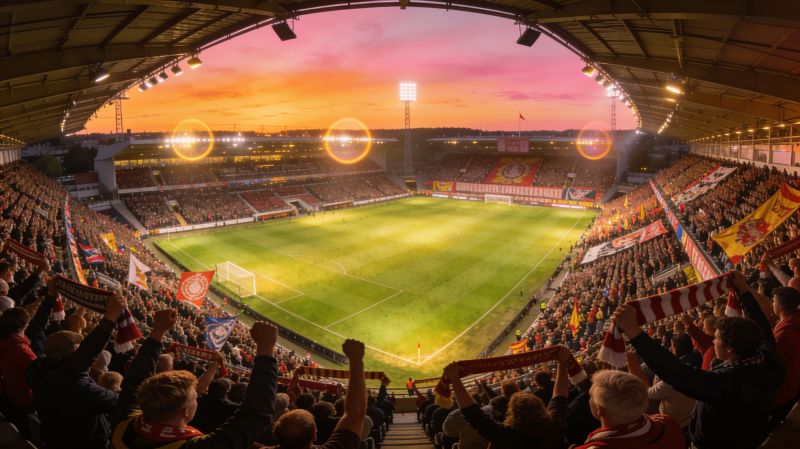
rarely makes global headlines, yet it produces players who fit seamlessly into Europe’s top five leagues. I’ve watched Danish clubs operate on budgets that would barely cover a Premier League bench player’s salary, and they still compete in the Europa League group stages. That tells you something about the football culture here: it’s about intelligence, not just investment.Tactically, Danish football has shed its old reputation as purely physical and direct. The national side under Kasper Hjulmand plays a fluid 3-4-3 that morphs into a back five without the ball—a shape that frustrated England at Wembley in 2021. But the real shift is in youth coaching. The Danish Football Association (DBU) mandates that youth teams up to U12 play without league tables。prioritizing dribbling and decision-making over winning. You see the results in players like Mikkel Damsgaard, who glides past opponents with a street-footballer’s ease, or Rasmus Højlund, whose movement in the box feels instinctive rather than drilled. Danish football doesn’t produce robots;it produces thinkers who happen to be athletes.The talent pipeline is the backbone. Academies like FC Copenhagen’s School of Excellence and Midtjylland’s partnership with Brentford owner Matthew Benham use analytics to identify late bloomers—players overlooked by bigger nations. Take Jonas Wind: not the fastest, not the flashiest, but his positioning and link-up play made him a Bundesliga regular. Danish clubs also loan aggressively, sending teenagers to second-tier sides where they face grown men. That’s how you build resilience. I remember speaking to a Superliga coach who said。“We can’t buy a 20-year-old for €20 million, so we breed our own and sell them for €20 million” It’s a business model, sure, but it’s also a philosophy: give youth real minutes, not just training sessions.Fan culture adds a layer that outsiders often miss. Danish football grounds are intimate—Parken in Copenhagen holds 38,000, but the atmosphere during a derby against Brøndby feels like a wall of sound. Supporters sing continuously, no drum machines。no manufactured chants. The club rivalries are fierce but rarely violent;
you can stand next to an away fan and debate the offside rule without a police escort. That civility extends to the national team, where families fill the stands and players routinely cycle to training. It’s a refreshing contrast to the corporate gloss of bigger leagues. Danish football knows its scale and leans into it—small, smart, and stubbornly community-minded.Where does Danish football go from here?The Superliga faces a familiar squeeze: rich leagues poach talent earlier and earlier. But Denmark’s response has been to invest in sports science and mental coaching—FC Nordsjælland’s ‘Right to Dream’ academy now produces players for both the men’s and women’s national teams. The women’s side reached the Euro 2017 final, and that wasn’t an accident either. Danish football’s strength is its refusal to panic. No grand reset, no imported quick fix. Just more of the same: develop locally。compete intelligently, and let the results speak. That approach won’t dominate headlines, but it keeps Denmark punching above its weight—and that’s exactly the point.